Initiatives
Explore the New Jersey Mental Health Institute’s (NJMHI) current and archived initiatives supporting mental health and substance use treatment across New Jersey.
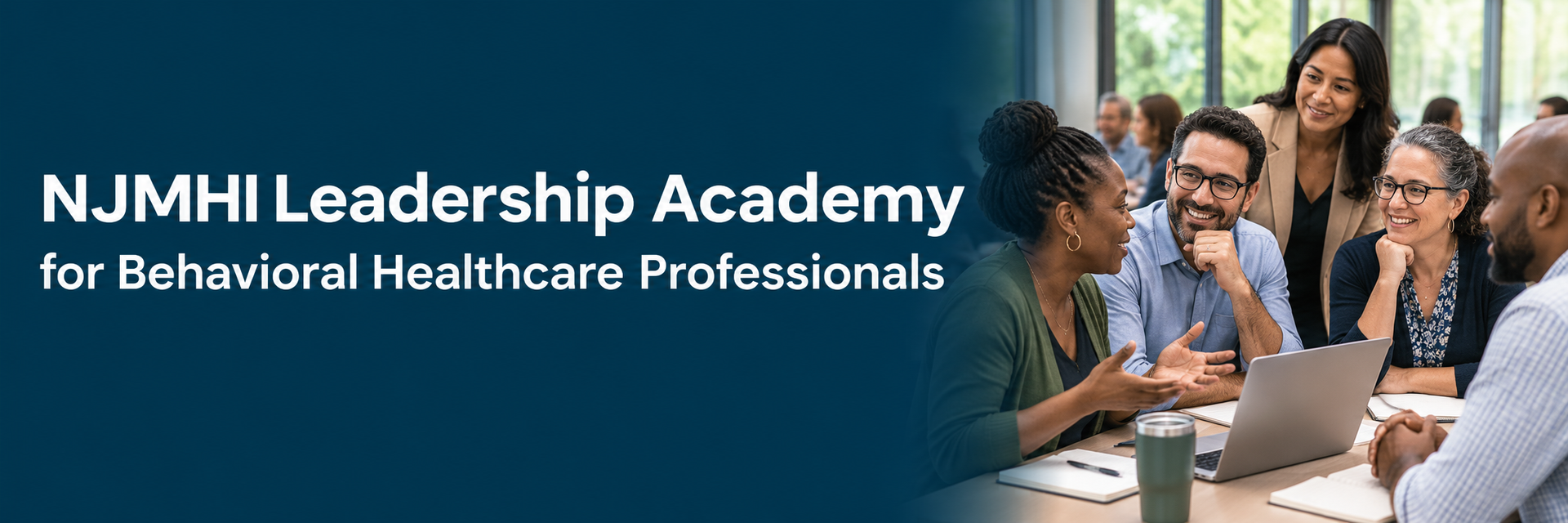
The NJMHI Leadership Academy is a yearlong program that helps emerging behavioral healthcare leaders build practical management skills. Participants work with a mentor from the field and a coach from another industry, attend a speaker series, and complete a project tied to their work. The academy welcomes professionals in both clinical and nonclinical roles.
Archived Initatives
From 2014 to 2018, NJMHI trained community-based clinicians in evidence-based behavioral healthcare practices to improve access to treatment for veterans, active-duty service members, and their families. The series covered topics such as cognitive behavioral therapy, military culture and engagement, and suicide risk assessment. By 2017, three Certified Community Behavioral Health Clinics had partnered with NJMHI to train clinicians and evaluate the program.
After the 2004 tsunami, NJMHI partnered with local organizations in Sri Lanka to train more than 100 professionals and volunteers to recognize mental health concerns and connect people with care. The project offered training and educational materials in English, Sinhala, and Tamil. A later phase trained community leaders in basic counseling skills and established a network of mental health facilitators across 10 districts.
Over nearly five years, NJMHI partnered with Rutgers University Behavioral Health Care to train more than 11,000 Children’s System of Care partners. NJMHI also supported training and technical assistance across New Jersey, helping providers assess children’s and families’ needs and plan services that support children with serious emotional disorders at home, in school, and in their communities.
Launched in 2001, Changing Minds, Advancing Mental Health for Hispanics was NJMHI’s first initiative. It worked to improve access to quality mental health care for Hispanic communities through bilingual public education, Spanish-language family programs, scholarships for aspiring bilingual social workers, and training for providers. The project led to the launch of the National Resource Center for Hispanic Mental Health in 2006, extending the work nationwide.
Top of page